Choosing the best dermatologist in Pune is an important decision when you are dealing with acne, pigmentation, hair fall, skin allergies, scars, fungal infections, or other skin concerns. With many dermatology clinics and skin specialists available across Pune, it can sometimes be difficult to know which doctor is right for you.
The right dermatologist should not only focus on appearance but also understand the underlying cause of your skin condition and recommend an appropriate treatment plan.
What Does a Dermatologist Do?
A dermatologist is a medical specialist who diagnoses and treats conditions affecting the skin, hair, and nails. Dermatologists can manage common concerns such as acne and pigmentation as well as conditions including eczema, psoriasis, infections, hair disorders, and other medical skin problems.
Depending on your concern, a dermatologist may recommend medicines, skincare, procedures, laser treatments, or a combination of approaches.
How to Choose the Best Dermatologist in Pune
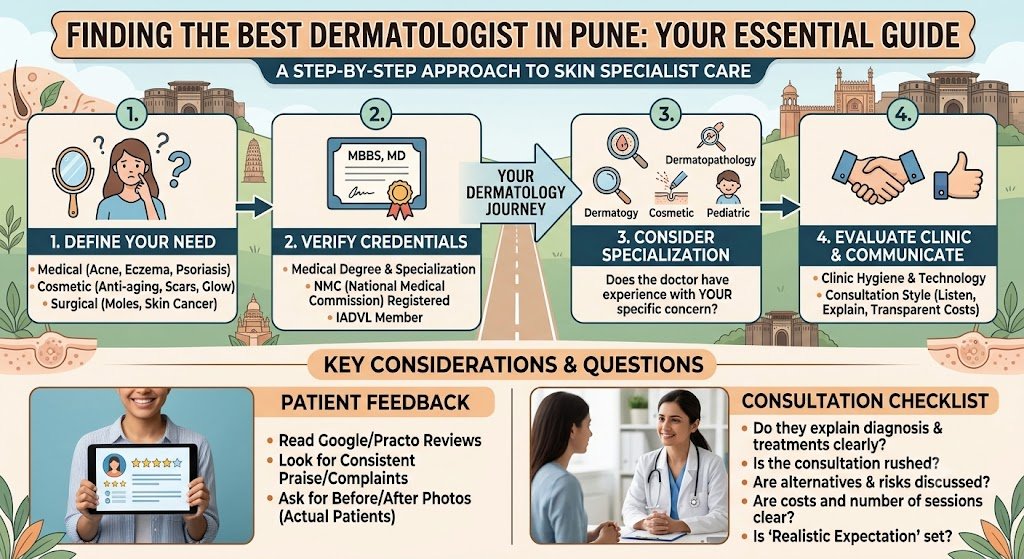
1. Check the Doctor’s Qualifications
One of the first things to check is the dermatologist’s educational background and professional registration.
In India, you can look for qualifications such as MBBS followed by postgraduate dermatology training, such as MD, DNB, or other recognized dermatology qualifications.
A qualified medical professional is better equipped to diagnose skin conditions and determine whether a medical treatment or cosmetic procedure is appropriate.
2. Consider Experience With Your Specific Skin Concern
Not every skin problem requires the same expertise. Before booking an appointment, consider whether the dermatologist regularly treats your particular concern.
For example, you may want a dermatologist experienced in:
- Acne and acne scars
- Pigmentation and melasma
- Hair fall and scalp problems
- Eczema and skin allergies
- Psoriasis
- Fungal infections
- Skin rejuvenation
- Laser treatments
- Unwanted hair
- Anti-ageing concerns
Choosing someone familiar with your specific concern can help make your consultation more focused.
3. Look at Patient Reviews Carefully
Online reviews can provide useful information about patient experiences, communication, clinic environment, and appointment processes.
However, reviews should not be the only factor in your decision. Consider the doctor’s qualifications, experience, treatment approach, and whether the clinic is appropriate for your particular concern.
4. Pay Attention to the First Consultation
A good consultation should involve more than simply recommending a product or procedure.
The dermatologist should ideally understand your symptoms, medical history, current skincare routine, previous treatments, medications, and expectations. Dermatology guidance also recommends preparing information about medications and previous treatments before an appointment.
A doctor who carefully examines your skin and explains the possible causes of your concern can help you make a more informed treatment decision.
5. Ask About the Treatment Plan
Before starting treatment, don’t hesitate to ask questions such as:
- What is causing my skin problem?
- What treatment do you recommend?
- How long could treatment take?
- Are there possible side effects?
- Will I need follow-up appointments?
- Are there alternatives?
- What skincare should I follow at home?
A good dermatologist should explain the treatment in language that you can understand. Clear communication is an important part of a comfortable patient-doctor relationship.
6. Don’t Choose a Clinic Only Because of Cosmetic Offers
Discounts and attractive treatment packages can be tempting, especially for cosmetic procedures. However, your decision should primarily be based on medical expertise, appropriate diagnosis, safety, hygiene, and suitability of the treatment.
Be cautious if a clinic immediately recommends expensive procedures without first properly assessing your skin.
7. Consider Location and Follow-Up Convenience
Pune is a large city, so location can also matter. A clinic that is reasonably convenient for you can make follow-up appointments easier, particularly when a treatment requires multiple visits.
You can find dermatology clinics in areas such as Kalyani Nagar, Kharadi, Baner, Aundh, Viman Nagar, Shivajinagar, Hadapsar, and other parts of Pune.
When Should You See a Dermatologist?
You may consider consulting a dermatologist if you have persistent or worsening:
- Acne
- Acne scars
- Pigmentation
- Itching or rashes
- Hair fall
- Dandruff or scalp problems
- Skin allergies
- Fungal infections
- Dry or irritated skin
- Unusual changes in a mole or skin lesion
If a skin problem keeps returning despite home remedies or over-the-counter products, professional evaluation may be worthwhile.
What to Expect During Your First Visit
During your first consultation, the dermatologist may ask about when the problem started, previous treatments, medications, allergies, lifestyle factors, and your skincare routine.
They may examine the affected area and, depending on the condition, recommend further testing or treatment.
Preparing a list of your current medicines, supplements, skincare products, and previous treatment history can make the consultation more useful.
Best Dermatologist in Pune: Focus on the Right Doctor for You
There is no single dermatologist who is automatically the “best” for every patient. The right choice depends on your specific skin concern, the doctor’s qualifications, relevant experience, communication style, treatment approach, clinic standards, and convenience.
Instead of choosing a dermatologist only because they appear first in an online search, take some time to compare your options and choose a qualified professional who makes you comfortable and clearly explains your treatment.
Conclusion
Finding the best dermatologist in Pune doesn’t have to be difficult. Start by checking qualifications, experience, patient feedback, treatment options, consultation quality, and clinic standards.
Most importantly, remember that healthy skin is not about following every trend or trying every cosmetic treatment. It is about understanding your skin and receiving the right professional guidance for your individual nee