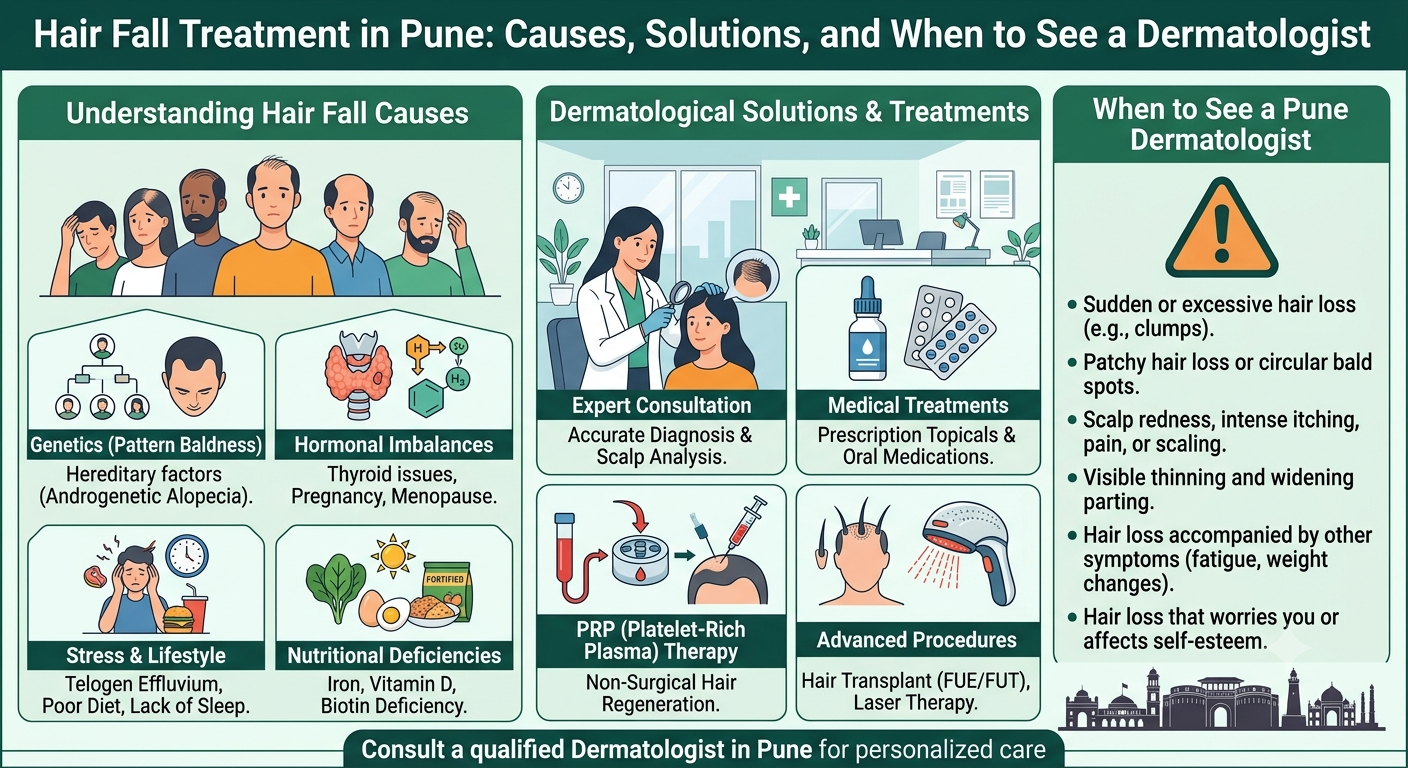
Hair fall is a common concern for both men and women. Losing some hair every day can be normal, but excessive or persistent hair shedding may indicate an underlying problem that needs attention.
If you are searching for hair fall treatment in Pune, the first step should be understanding the possible cause. Hair loss can result from genetics, hormonal changes, nutritional deficiencies, stress, scalp conditions, illness, or certain medications. A qualified dermatologist can evaluate your condition and recommend an appropriate treatment plan.
What Causes Hair Fall?
Hair loss can have many different causes. Identifying the cause is important because treatment depends on the type of hair loss.
1. Genetic Hair Loss
Genetic or pattern hair loss is one of the most common causes of gradual hair thinning.
In men, it may appear as a receding hairline or thinning at the crown. In women, thinning may be more noticeable around the central parting.
Early diagnosis can be helpful because treatment may be more effective when started before significant hair loss occurs.
2. Stress and Lifestyle Changes
Physical or emotional stress can sometimes trigger increased hair shedding. Major illness, surgery, significant weight changes, poor sleep, or other stressful events may contribute to temporary hair loss.
In some cases, increased shedding becomes noticeable several weeks or months after the triggering event.
3. Nutritional Deficiencies
Inadequate nutrition or certain deficiencies may contribute to hair problems. Depending on your symptoms and medical history, a dermatologist may recommend appropriate blood tests to identify possible deficiencies.
Avoid taking high-dose supplements without medical advice, as unnecessary supplementation may not improve hair growth and can sometimes cause problems.
4. Hormonal Changes
Hormonal changes can contribute to hair loss. Conditions affecting thyroid function and other hormonal changes may be associated with increased shedding or thinning.
If your hair loss occurs along with other unusual symptoms, a medical evaluation can help identify the underlying cause.
5. Scalp Conditions
Dandruff, inflammation, infections, and other scalp conditions can affect scalp health and sometimes contribute to hair shedding.
Treating the underlying scalp condition may be an important part of managing the hair problem.
6. Certain Medicines or Medical Conditions
Some medicines and medical conditions can cause temporary or persistent hair loss. If you notice significant hair shedding after starting a medication or following an illness, speak with a healthcare professional rather than stopping prescribed medication on your own.
Hair Fall Treatment Options
There is no single treatment that works for every type of hair loss. Treatment should be selected according to the diagnosis.
Medical Treatment
Depending on the cause, a dermatologist may recommend topical or oral medicines. Some treatments are designed to slow hair loss, while others may support regrowth.
Prescription treatments should be used under medical supervision.
Treating Nutritional Deficiencies
If testing confirms a nutritional deficiency, your dermatologist or physician may recommend dietary changes or appropriate supplementation.
A balanced diet containing adequate protein, vitamins, minerals, and other essential nutrients supports overall health and hair growth.
Scalp Treatment
If dandruff, inflammation, or another scalp condition is contributing to hair problems, treating the scalp condition may help improve scalp health.
Hair Restoration Procedures
For selected patients, dermatologists may recommend procedures such as platelet-rich plasma (PRP) therapy or other hair-restoration approaches.
The suitability and expected results of these treatments vary from person to person. A consultation is important before choosing a procedure.
Hair Transplantation
For certain types of permanent hair loss, hair transplantation may be considered. It is a surgical procedure and should be evaluated carefully by a qualified professional.
Simple Tips to Reduce Hair Damage
Although not every type of hair loss can be prevented, healthy hair-care habits can reduce unnecessary damage.
- Avoid excessive heat styling.
- Limit frequent chemical treatments when possible.
- Avoid very tight hairstyles that constantly pull on the hair.
- Use a gentle shampoo appropriate for your scalp.
- Treat persistent dandruff or scalp irritation.
- Maintain a balanced diet.
- Avoid crash diets and extreme calorie restriction.
- Manage stress and maintain adequate sleep.
- Avoid taking hair supplements without understanding whether you actually need them.
When Should You See a Dermatologist?
Consider seeing a dermatologist if you experience:
- Sudden or excessive hair shedding
- Noticeable thinning of the scalp
- Receding hairline or increasing bald patches
- Circular patches of hair loss
- Persistent dandruff or scalp itching
- Hair loss accompanied by scalp redness or pain
- Hair loss that continues for several months
- Hair loss associated with other unexplained symptoms
Early evaluation can help determine whether the hair loss is temporary, genetic, related to a scalp condition, or caused by another underlying issue.
What Happens During a Hair Fall Consultation?
During a consultation, a dermatologist may ask about your:
- Hair-loss pattern
- Family history
- Diet and lifestyle
- Recent illnesses or stress
- Current medicines
- Hair-care routine
- Scalp symptoms
- Previous hair-loss treatments
The dermatologist may examine your scalp and hair closely. Depending on the suspected cause, blood tests or other investigations may sometimes be recommended.
This evaluation helps create a treatment plan based on the actual cause rather than simply treating the symptom.
Choosing a Dermatologist for Hair Fall Treatment in Pune
When searching for hair fall treatment in Pune, don’t choose a clinic only because it advertises quick results or expensive packages.
Look for a qualified dermatologist who:
- Properly evaluates the cause of hair loss
- Explains the diagnosis clearly
- Discusses realistic treatment expectations
- Recommends treatments appropriate for your condition
- Provides follow-up when necessary
- Does not promise guaranteed results
A personalized approach is particularly important because two people with similar-looking hair loss may have completely different underlying causes.
Conclusion
Hair fall can be frustrating, but effective management starts with identifying the cause. Genetics, stress, nutritional deficiencies, hormonal changes, scalp conditions, medications, and medical conditions can all play a role.
If you are experiencing persistent or excessive hair loss, consulting a qualified dermatologist in Pune can help you understand the reason for your hair fall and choose an appropriate treatment approach.