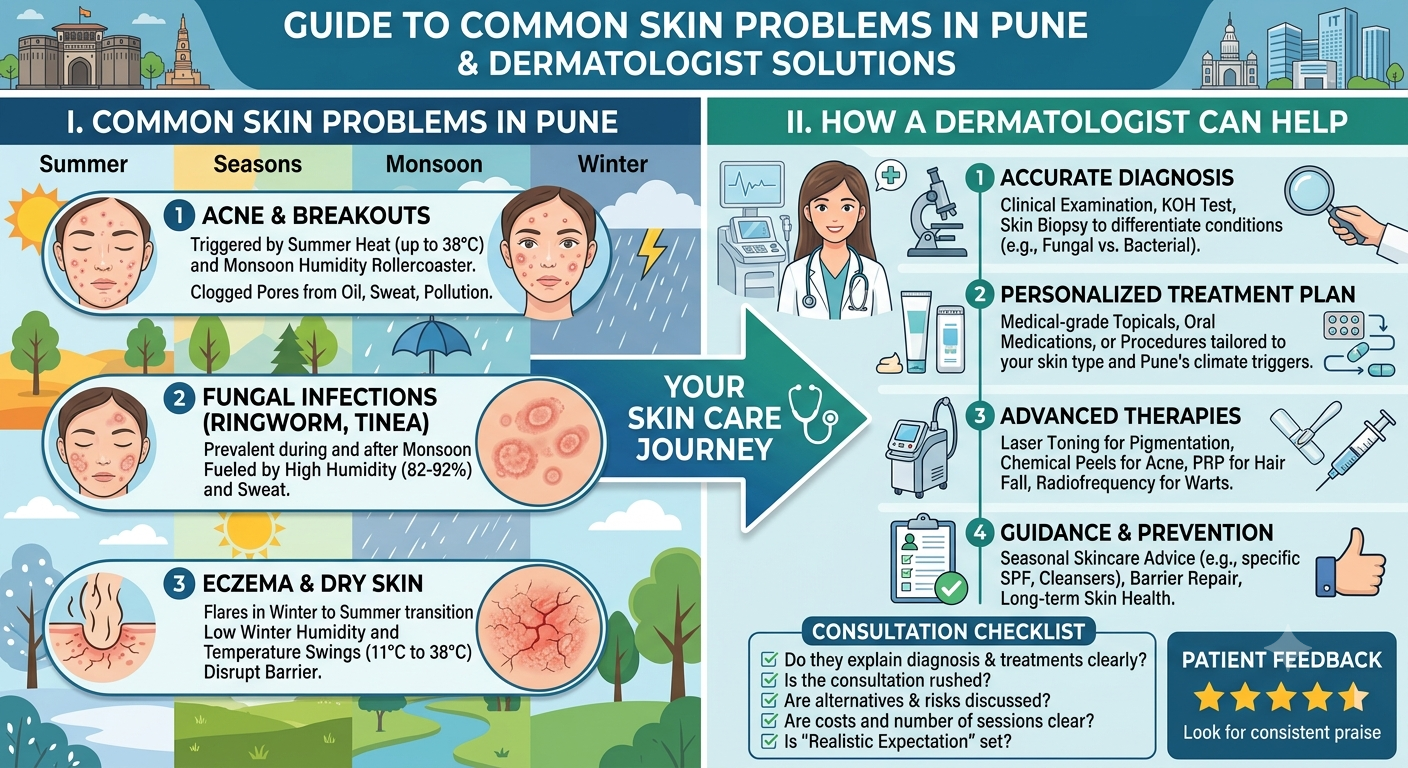
Pune’s growing population, changing weather conditions, pollution, dust, traffic, and busy lifestyles can all influence skin health. From acne and pigmentation to fungal infections and hair-related concerns, many people experience skin problems at different stages of life.
While some minor skin concerns may improve with basic skincare, persistent or recurring problems may require professional evaluation. A qualified dermatologist in Pune can identify the underlying cause and recommend an appropriate treatment plan.
1. Acne and Pimples
Acne is one of the most common skin concerns among teenagers and adults. It can appear as blackheads, whiteheads, pimples, or deeper painful lesions.
Factors such as hormones, genetics, stress, certain skincare products, and lifestyle can contribute to acne.
A dermatologist can assess the severity of acne and recommend treatments such as topical medicines, oral medicines, or procedures when appropriate. Early treatment can also help reduce the risk of long-term acne scars.
2. Skin Pigmentation and Dark Spots
Uneven skin tone, tanning, dark spots, and pigmentation are common concerns. Sun exposure can worsen several pigmentation conditions, while acne can leave behind dark marks after the inflammation has healed.
A dermatologist can determine the type and possible cause of pigmentation before recommending treatment. Depending on the diagnosis, treatment may include prescription skincare, chemical peels, laser-based procedures, or other dermatological approaches.
Daily sun protection is also an important part of managing many pigmentation concerns.
3. Fungal Skin Infections
Fungal infections can cause itching, redness, scaling, or circular patches on the skin. Warm and humid conditions, sweating, tight clothing, and prolonged moisture can contribute to fungal infections.
Self-treatment can sometimes make the problem more difficult to manage, particularly when the wrong cream is used.
A dermatologist can examine the affected area, determine whether it is actually a fungal infection, and recommend suitable antifungal treatment.
4. Eczema and Skin Allergies
Eczema and other inflammatory skin conditions may cause dryness, itching, redness, irritation, or recurring rashes.
Triggers can vary from person to person and may include certain products, environmental factors, irritants, or allergies.
A dermatologist can help identify possible triggers and create a treatment and skincare routine to manage symptoms and reduce flare-ups.
5. Hair Fall and Scalp Problems
Hair fall is another common reason people seek dermatological advice. Temporary shedding can occur for many reasons, while persistent hair loss may have different underlying causes.
Dandruff, scalp inflammation, nutritional factors, hormonal changes, genetics, and other conditions can contribute to hair and scalp problems.
A dermatologist can evaluate your scalp and hair-loss pattern and determine whether additional tests or specific treatment may be required.
6. Sunburn and Sun Damage
Regular exposure to sunlight can cause tanning and sunburn and may contribute to premature skin ageing and pigmentation.
People who spend significant time outdoors may benefit from appropriate sun-protection habits, including protective clothing and sunscreen.
If you experience repeated sunburn, persistent pigmentation, or other changes in your skin, a dermatologist can assess the condition and suggest appropriate care.
7. Dry and Sensitive Skin
Dryness, irritation, redness, and sensitivity can occur when the skin barrier becomes damaged or when the skin is exposed to irritating products or environmental conditions.
Using too many active skincare products can sometimes worsen irritation.
A dermatologist can help identify the cause of persistent sensitivity and recommend a simple skincare routine based on your skin type and condition.
8. Psoriasis
Psoriasis is a chronic inflammatory skin condition that can cause thick, scaly patches on the skin. It may affect areas such as the elbows, knees, scalp, or other parts of the body.
Because psoriasis can vary considerably between individuals, professional diagnosis is important.
A dermatologist can evaluate the condition and recommend an appropriate management plan.
How Can a Dermatologist Help?
A dermatologist does more than recommend skincare products. The first step is usually to understand your symptoms and examine your skin, hair, or nails.
Depending on the condition, a dermatologist may recommend:
- Prescription creams or medicines
- Medicated skincare
- Allergy or other diagnostic testing
- Chemical peels
- Laser-based treatments
- Acne scar procedures
- Hair and scalp treatments
- Long-term management for chronic skin conditions
The appropriate treatment depends on the diagnosis, severity, medical history, and individual needs.
When Should You Visit a Dermatologist?
Consider consulting a dermatologist if your skin problem:
- Continues for several weeks
- Keeps coming back
- Becomes painful or severely itchy
- Is spreading
- Leaves scars or pigmentation
- Does not improve with basic skincare
- Is affecting your confidence or daily life
Early professional evaluation can help identify the cause and prevent inappropriate self-treatment.
Choosing a Dermatologist in Pune
When selecting a dermatologist, consider the doctor’s qualifications, experience, approach to diagnosis, patient communication, clinic standards, and experience with your specific concern.
Instead of choosing a doctor only because of advertisements or online popularity, look for a qualified professional who takes time to understand your concerns and explains treatment options clearly.
Conclusion
Skin problems such as acne, pigmentation, fungal infections, eczema, hair fall, sun damage, and sensitive skin can affect people of all ages. While good skincare habits are important, persistent or recurring problems may need professional attention.
A qualified dermatologist in Pune can help identify the underlying cause of your skin concern and guide you toward an appropriate treatment plan.
Healthy skin is not about following every skincare trend. It is about understanding your skin, protecting it, and getting professional help when you need it.