Acne and pimples are among the most common skin problems affecting teenagers and adults. They can appear on the face, forehead, chest, back, and shoulders. While occasional pimples are normal, persistent or severe acne can sometimes lead to dark spots, acne scars, and emotional stress.
The good news is that acne can often be managed effectively with the right skincare routine and professional dermatological treatment.
What Is Acne?
Acne is a skin condition that develops when hair follicles become clogged with oil (sebum), dead skin cells, and other debris. Inflammation and the activity of acne-associated bacteria can contribute to the development of pimples.
Acne can appear in several forms, including:
- Blackheads
- Whiteheads
- Small red bumps
- Pus-filled pimples
- Deep, painful lumps or cysts
The severity and type of acne can vary from person to person.
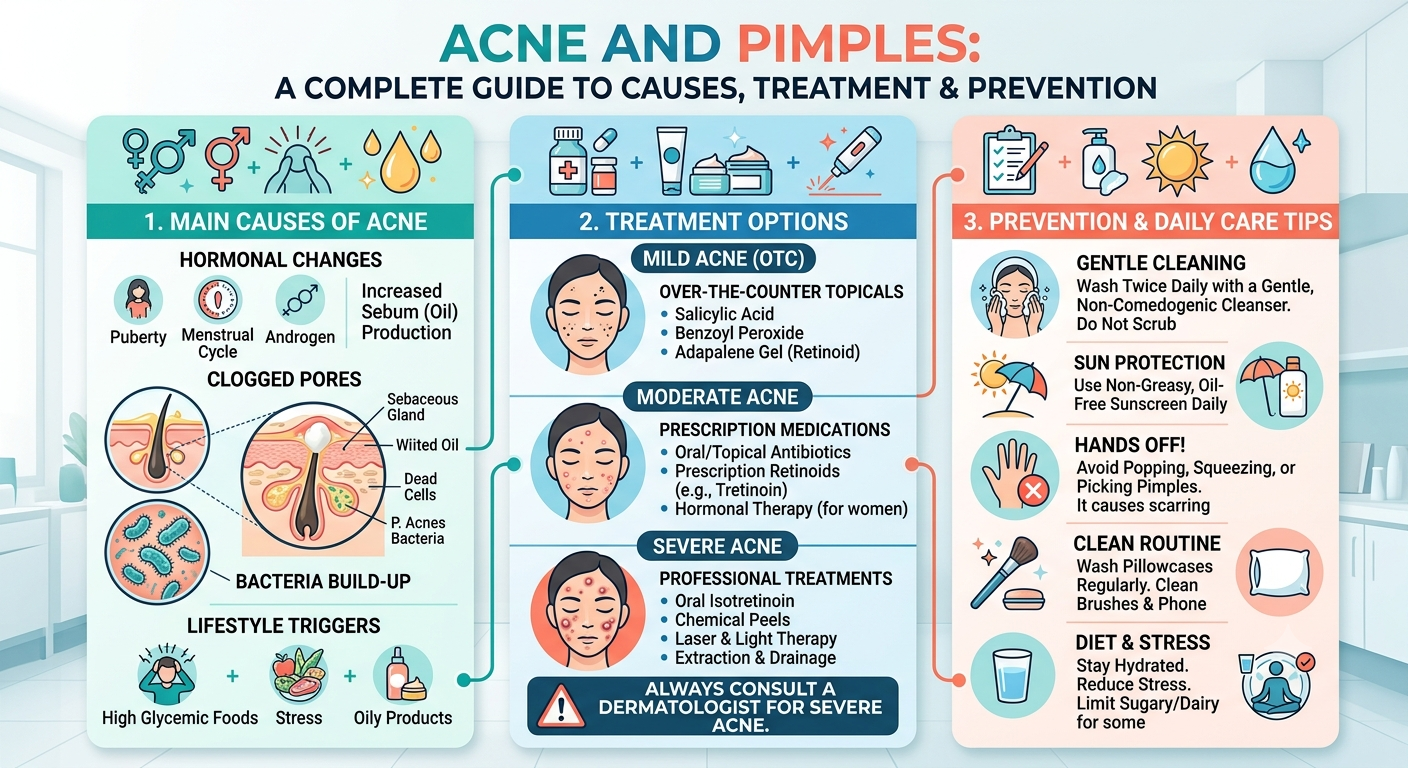
Common Causes of Acne
1. Hormonal Changes
Hormonal fluctuations can increase oil production and contribute to acne. This is particularly common during puberty, but hormonal acne can also affect adults.
2. Excess Oil Production
When the skin produces excess sebum, pores may become clogged more easily, increasing the likelihood of breakouts.
3. Clogged Pores
Dead skin cells can combine with oil and block hair follicles, creating an environment where acne lesions can develop.
4. Genetics
If close family members have experienced acne, you may have a higher tendency to develop it.
5. Stress
Stress does not necessarily cause acne by itself, but it can contribute to worsening breakouts in some people.
6. Skincare and Cosmetic Products
Some heavy or unsuitable products may contribute to clogged pores. Choosing products labelled non-comedogenic can be helpful for acne-prone skin.
7. Certain Medications or Medical Conditions
Some medications and underlying hormonal or medical conditions can contribute to acne. If acne appears suddenly, becomes severe, or is accompanied by other symptoms, professional medical evaluation is recommended.
Acne Treatment Options
The best acne treatment depends on the type and severity of the condition.
Topical Treatments
Dermatologists may recommend topical treatments containing ingredients such as benzoyl peroxide, retinoids, or other prescription medicines depending on the patient’s condition.
Oral Medicines
For moderate to severe acne, a dermatologist may consider oral medicines when appropriate. These should only be taken under medical supervision.
Acne Scar Treatment
If acne has already caused scars, dermatological procedures may be considered after active acne is controlled. Depending on the type of scar, treatment options may include procedures such as chemical peels, microneedling, subcision, or laser-based treatments.
The appropriate procedure varies according to the individual’s skin and scar type.
Simple Tips to Prevent Acne Breakouts
Keep Your Face Clean
Wash your face gently rather than repeatedly scrubbing it. Over-washing or aggressive scrubbing can irritate the skin.
Avoid Picking or Squeezing Pimples
Squeezing pimples can increase inflammation and may increase the risk of marks and scarring.
Choose Suitable Skincare Products
If you have acne-prone skin, consider lightweight, non-comedogenic skincare and cosmetic products.
Remove Makeup Before Sleeping
Leaving makeup on overnight may contribute to clogged pores and irritation. Gently remove makeup before going to bed.
Protect Your Skin From the Sun
Sun exposure can worsen some post-acne dark marks. Using an appropriate broad-spectrum sunscreen can help protect the skin.
Maintain a Consistent Routine
Acne treatment usually requires consistency. Frequently changing products may irritate your skin and make it difficult to determine what is actually helping.
When Should You See a Dermatologist?
You should consider consulting a dermatologist if:
- Acne is severe or painful
- Pimples keep returning
- Acne is leaving dark marks or scars
- Over-the-counter products are not helping
- Acne is affecting your confidence
- You suddenly develop significant acne as an adult
A dermatologist can identify the type and severity of acne and recommend a treatment plan suited to your skin.
Acne Treatment in Pune
If you are searching for acne treatment in Pune, choosing a qualified dermatologist is an important first step. Avoid relying only on home remedies or social-media skincare trends, especially when acne is persistent or severe.
A professional consultation can help determine whether your acne is related to hormones, clogged pores, inflammation, medications, skincare products, or another factor.
Conclusion
Acne and pimples are common, but they don’t have to be ignored. Understanding the possible causes and following a consistent skincare routine can help manage breakouts.
If acne is persistent, painful, or causing scars, consulting a qualified dermatologist in Pune can help you understand your condition and explore appropriate treatment options.
Remember: there is no single acne treatment that works for everyone. The right approach depends on your skin type, acne severity, medical history, and individual needs.